

Top Causes of Drain Clogs at Home
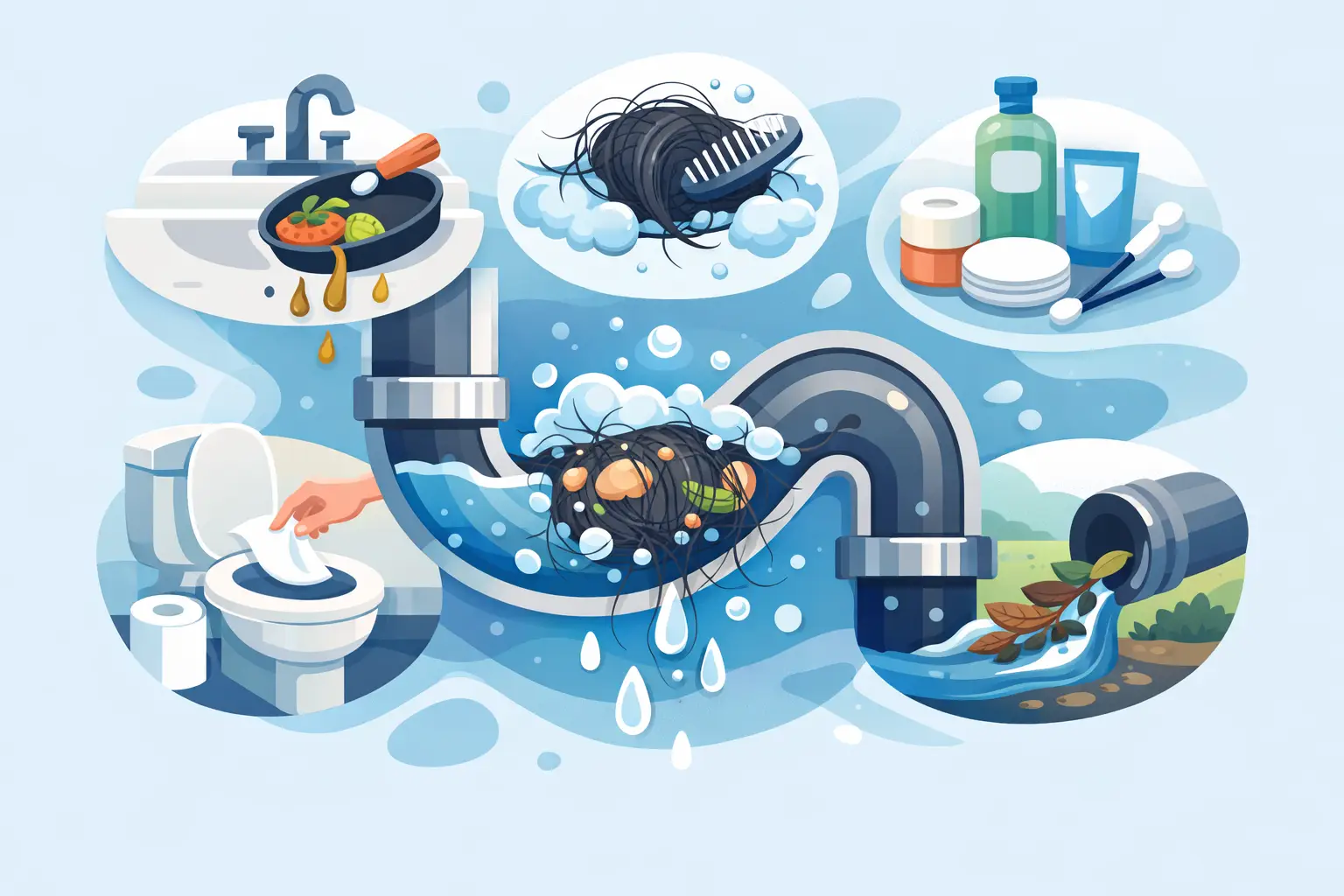
A sink that starts draining slowly on Monday can turn into a full backup by Friday. That is why understanding the top causes of drain clogs matters. Most clogs do not happen all at once. They build up over time, usually from everyday habits that seem harmless until water stops moving.
Some drain problems stay local to one fixture. Others point to a larger issue in the branch line or even the main sewer. The difference matters, because a plunger-level problem and a sewer line blockage are not the same job. Knowing what commonly causes clogs can help you act early and avoid bigger cleanup, repair, and downtime later.
The top causes of drain clogs in kitchens
Kitchen drains take a steady beating. Even careful homeowners end up sending the wrong material down the sink now and then. The biggest offender is grease. It may go down hot as a liquid, but once it cools inside the pipe, it sticks to the walls and starts collecting food particles.
Over time, that greasy coating narrows the line. Then small scraps, coffee grounds, pasta, rice, and soap residue start catching on it. What began as a thin film turns into a thick blockage. In homes and commercial kitchens alike, this is one of the top causes of drain clogs because it builds quietly and gets worse with every use.
Food waste is another common issue, even when there is a garbage disposal. Disposals help break material down, but they do not make drains invincible. Fibrous foods like celery, corn husks, onion skins, and potato peels can wrap around components or collect in the trap. Starchy foods swell with water and turn into paste. Eggshells and coffee grounds also create dense buildup that is harder to flush through than many people realize.
Hot water and dish soap can help with minor residue, but they are not a fix for grease-heavy lines. Once buildup has started hardening inside the pipe, the right solution depends on how severe the restriction is.
Bathroom clogs usually start with buildup, not one big blockage
In bathrooms, hair is the most common cause. It combines with soap scum, conditioner, shaving residue, and toothpaste to form a stubborn mass that catches more debris over time. Shower and tub drains usually show warning signs first, such as slow draining water or a puddle around your feet.
Sink drains can clog the same way, especially in bathrooms used for shaving or heavy grooming. Toothpaste may seem minor, but when it mixes with soap and hair, it contributes to a thick blockage inside the trap and branch line.
Toilets are a different story. Toilet paper is made to break down, but flushable wipes often do not break apart the way people expect. Paper towels, feminine hygiene products, cotton swabs, and excessive paper use can also create a stoppage fast. In multi-unit buildings and commercial restrooms, repeated improper flushing is a common source of recurring backups.
There is also a trade-off here. A toilet that clogs once may just have had too much material flushed at one time. A toilet that bubbles when another fixture is used, or backs up repeatedly, may be connected to a larger drainage or venting issue. That is when the problem may be beyond the toilet itself.
Soap scum and mineral scale make clogs worse
Not every clog starts with something obvious. In many homes, soap residue slowly sticks to the inside of the pipe and creates a rough surface where debris can collect. If the property has hard water, mineral scale can make that surface even narrower.
This kind of buildup does not always create a sudden blockage. More often, it causes chronic slow drains and repeat service calls. It also explains why some drains keep clogging even after a temporary cleaning. If the pipe walls are still coated, the line is ready to trap debris again.
Older plumbing systems are especially vulnerable. Rougher interior pipe surfaces give buildup more places to hold on. In parts of Chicago with aging homes and older drain lines, that can make routine clogs more frequent than homeowners expect.
The top causes of drain clogs can be farther down the line
Sometimes the issue is not in the sink, shower, or toilet at all. The clog may be deeper in the drainage system. When multiple fixtures are slow or backing up, that is a strong sign the blockage may be in a shared branch line or the main sewer line.
Tree roots are a major cause of sewer clogs. Roots naturally seek moisture, and even a small crack or loose joint in an underground pipe can attract them. Once inside, they grow, trap debris, and restrict flow. In severe cases, they can damage the pipe itself.
This is one of those situations where waiting usually makes things worse. A partial root intrusion may start as an occasional slow drain. Then the line catches paper waste and sludge, and the backup becomes more frequent. For homes with mature trees or older sewer infrastructure, this is a problem worth taking seriously.
Pipe damage can create the same pattern. A sag in the line, offset joints, corrosion, or a break underground can interrupt normal flow and cause waste to collect. When that happens, repeated clogs are not just a cleaning issue. They are a symptom of a structural problem that needs to be diagnosed correctly.
Drain misuse is more common than most people think
A lot of drain problems come down to what people assume a plumbing system can handle. Drains are built to carry wastewater, not act as a catch-all for solids, grease, wipes, or debris.
In homes, that often means cooking grease in the kitchen and wipes in the bathroom. In commercial properties, especially restaurants and high-traffic buildings, the volume is higher and the margin for error is smaller. More usage means faster buildup and more opportunity for improper materials to enter the system.
That does not mean every clog is caused by negligence. Some materials are marketed in a way that confuses people. Others seem harmless because they go down easily at first. The problem is that easy to flush does not always mean safe for the line.
When a slow drain is not a simple clog
A single slow sink can often be traced to local buildup in the trap or nearby drain line. But if you notice gurgling sounds, water backing up in another fixture, floor drains filling, or sewage odors, there may be a larger system issue at play.
That is where proper diagnosis matters. Chemical drain cleaners may seem like a quick answer, but they often do not remove the full blockage. They can also create safety issues and add wear to certain pipes, especially if the line is already compromised. A temporary opening in the clog may restore flow for a short time, but the underlying problem remains.
Professional equipment helps identify whether the line needs mechanical cleaning, hydro jetting, or a camera inspection to confirm damage or root intrusion. The right approach depends on what is actually inside the pipe and how far the problem extends.
How to reduce the most common clogs
Prevention is usually less complicated than cleanup. In kitchens, keep grease, oil, and heavy food scraps out of the sink. In bathrooms, use drain screens where practical and avoid flushing anything other than toilet paper and human waste. In commercial settings, routine maintenance becomes even more important because higher usage accelerates buildup.
It also helps to pay attention to early warnings. Slow drains, frequent plunging, recurring odors, and backups after normal use are signs that the line is already collecting material. Acting early can prevent a complete stoppage and the mess that comes with it.
For properties with older sewer lines, mature trees, or a history of backups, periodic inspection can make a big difference. At Grayson Sewer and Drain, we see plenty of cases where the real issue was deeper than the fixture and had been building for months.
Drain clogs usually start small, but they rarely stay that way. If the same problem keeps coming back, that is your plumbing telling you something. The sooner you find the real cause, the easier it is to fix it the right way.
Related Articles

Top Causes of Drain Clogs at Home
By |

Sewer Repair vs Replacement: What to Choose
By |
