

Hydro Jetting Sewer Lines: What to Expect
A sewer line can seem fine until it suddenly isn’t. One day the drains are slow, the next day you have backups, foul odors, or wastewater coming up where it should never be. That is usually when people start asking about hydro jetting sewer lines and whether it is the right fix or just another temporary cleanout.
In the right situation, hydro jetting is one of the most effective ways to restore flow inside a sewer line. It uses high-pressure water to cut through buildup on the pipe walls and flush debris out of the system. Done properly, it does more than poke a hole through a clog. It cleans the line much more thoroughly than methods that only break through the blockage in one spot.
What hydro jetting sewer lines actually does
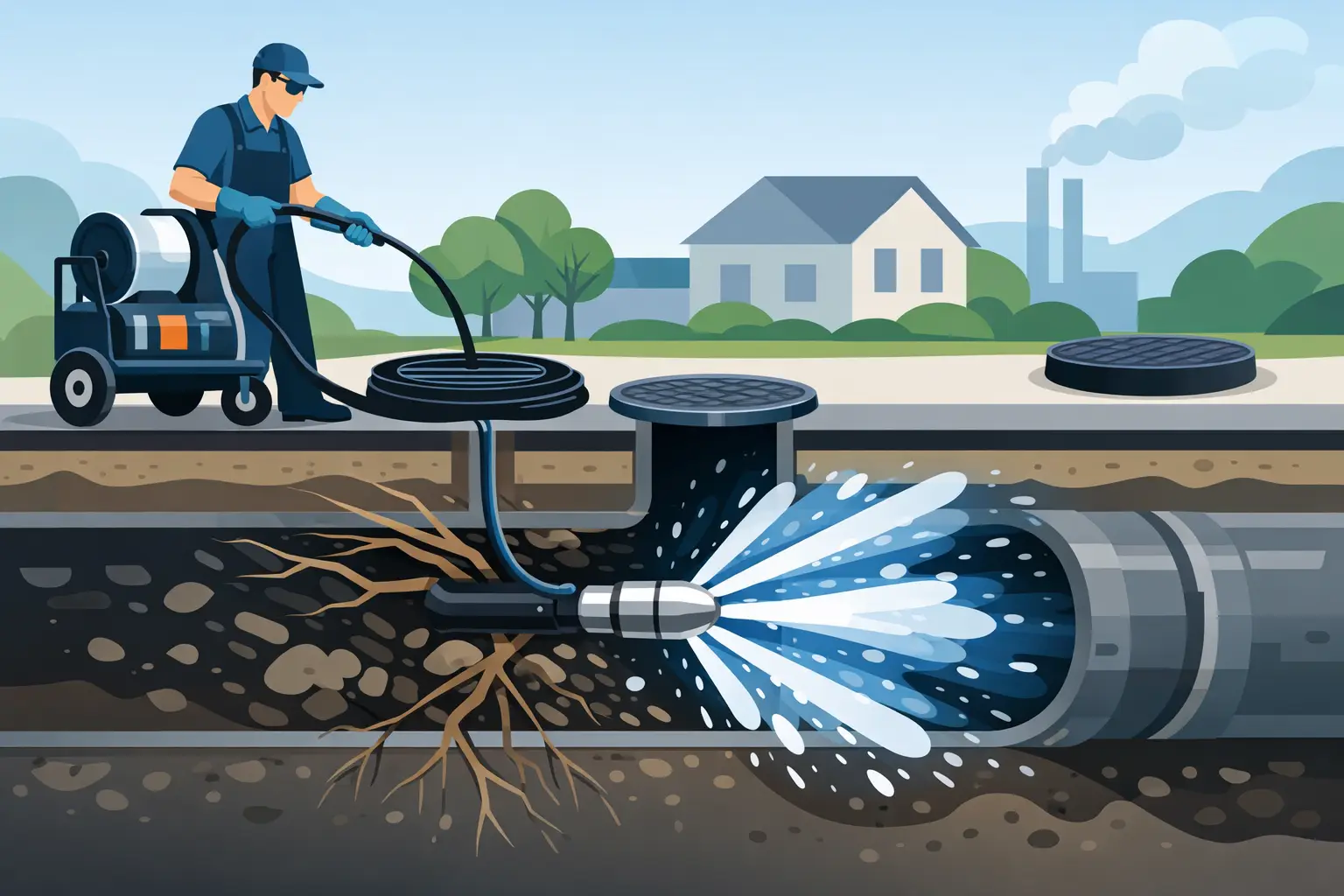
Hydro jetting is a cleaning process that sends pressurized water through a specialized hose and nozzle inside the sewer line. The nozzle is designed to spray water forward and backward. Forward-facing jets help break up obstructions, while rear jets pull the hose through the pipe and scour the interior walls.
That matters because many sewer problems are not caused by one solid object sitting in the line. They are caused by layers of grease, soap residue, sludge, paper buildup, scale, and in some cases tree roots. A basic cabling service may reopen a path through that material, but it often leaves a lot of debris behind. Hydro jetting removes much more of the buildup from the full diameter of the pipe.
For homeowners, that can mean fewer repeat backups. For restaurants, multi-unit buildings, and commercial properties, it can mean keeping lines open in systems that deal with heavy, frequent use.
When hydro jetting sewer lines makes sense
Hydro jetting is a strong option when a sewer line has recurring stoppages, heavy grease buildup, or thick sludge that keeps narrowing the inside of the pipe. It is also useful when a line has been neglected for years and needs a more complete cleaning than a standard snaking can provide.
In Chicago-area properties, older lines often collect scale and debris over time. Commercial kitchens can load drain systems with grease. Multi-unit buildings can see constant wear from heavy use. In those cases, hydro jetting is often part of a longer-term solution because it addresses the buildup across the pipe walls, not just the immediate clog.
It can also help prepare a line for inspection. If a sewer camera is trying to identify cracks, offsets, root intrusion, or other defects, heavy buildup can hide the real condition of the pipe. Cleaning the line first can provide a much clearer picture of what is going on.
When hydro jetting is not the right answer
This is where experience matters. Hydro jetting is powerful, but that does not mean every sewer line should be jetted right away.
If a pipe is badly deteriorated, collapsed, disconnected, or made of fragile material that is already failing, high-pressure cleaning may not be appropriate. The same goes for certain root problems. Hydro jetting can cut through some root intrusion, but if roots are getting in through broken joints or major structural defects, cleaning alone will not solve the bigger issue. The line may need repair or replacement.
That is why a proper inspection comes first in many cases. A camera inspection can show whether the blockage is just buildup or whether the pipe itself has structural damage. Honest contractors do not skip that step when conditions call for it. The goal is not just to clear the immediate problem. It is to avoid making the wrong call on the line.
Hydro jetting vs. snaking
People often ask whether hydro jetting is better than snaking. The real answer is that they do different jobs.
Snaking, or cabling, is often the fastest way to break through a blockage and restore basic flow. It is a practical option for many drain stoppages, especially when the issue is localized or access is limited. But it usually creates an opening through the clog rather than fully cleaning the entire inside surface of the pipe.
Hydro jetting is more of a deep cleaning method. It strips away grease, sludge, and residue that a cable may leave behind. If you have a line that keeps backing up because buildup returns again and again, jetting is often the more complete approach.
That said, it depends on the pipe condition, the type of blockage, and the urgency of the problem. Sometimes the right move is to cable first to restore immediate flow, then inspect and determine whether hydro jetting is the next step.
What the process usually looks like
A professional hydro jetting job starts with diagnosis, not guesswork. If the symptoms point to a main sewer issue, the line may be inspected with a camera to locate the blockage, assess the pipe condition, and identify any damage.
Once the line is confirmed to be a good candidate, the technician sets up the hydro jetting equipment and feeds the hose into the line through the proper access point. Water pressure is adjusted based on the pipe size, material, and the type of debris inside. That part is important. This is not about using maximum force every time. It is about using the right pressure for the job.
As the nozzle moves through the line, it breaks up accumulation and flushes it downstream. In many cases, the line is then reinspected to confirm that the blockage has been removed and the pipe walls are significantly cleaner. That final verification helps show whether the problem was just buildup or whether there are underlying defects that still need attention.
What problems hydro jetting can clear
Hydro jetting is especially effective against grease, soap scum, sludge, mineral scale, food waste, and paper buildup. It can also help with some root intrusion, depending on how severe it is.
For restaurants and food service properties, grease is one of the biggest reasons to consider it. Grease does not just sit in one place. It coats the pipe interior, narrows the opening, and catches more debris over time. The result is a line that may keep clogging even after it has been snaked. Hydro jetting can remove that coating far more effectively.
For residential properties, the issue is often years of gradual buildup. A line may still drain, just slower and slower, until one heavy use day pushes it over the edge. Jetting can restore performance if the pipe itself is still structurally sound.
Why the condition of the sewer line matters
The biggest mistake with sewer work is treating every backup like the same problem. A clogged line and a damaged line can produce similar symptoms, but they are not solved the same way.
If the sewer has bellied sections, separated joints, cracks, or a collapse, cleaning may offer only temporary relief or may not be the right move at all. That is why experienced sewer contractors focus on diagnosis first and equipment second. Modern tools are valuable, but only when they are used with good judgment.
For older homes and buildings, especially in areas with aging underground infrastructure, that caution matters. A line that has not been inspected in years should not be assumed to be a perfect candidate for jetting. Sometimes it is. Sometimes it is not. The difference shows up when the contractor takes the time to verify before starting work.
A smart option for maintenance, not just emergencies
Hydro jetting is often associated with major backups, but it can also make sense as preventive maintenance in the right setting. Commercial kitchens, apartment buildings, and facilities with heavy drain use may benefit from scheduled cleaning before a blockage turns into an emergency.
That does not mean every property needs routine jetting. A single-family home with no history of sewer issues may not. But if a building has recurring grease problems, repeated slow drainage, or a known history of buildup, preventive jetting can reduce disruptions and help avoid emergency calls.
This is where honest advice matters. Not every line needs the same maintenance schedule, and not every problem calls for the most aggressive cleaning method. A good contractor looks at usage, line condition, and service history before recommending anything.
At Grayson Sewer and Drain, that approach is simple: diagnose the problem clearly, use the right equipment for the condition of the line, and focus on a fix that holds up. Hydro jetting is a strong tool, but like any tool, it works best when it is used for the right job.
If your sewer line keeps backing up, smells worse than it should, or has been cleaned before without lasting results, hydro jetting may be worth a closer look. The right answer is not the fastest guess. It is the method that actually matches the condition of the pipe and solves the problem with confidence.
Related Articles

Sewer Line Repair: What Property Owners Should Know
By |

Top Causes of Drain Clogs at Home
By |
