

Basement Drain Backup Help That Works
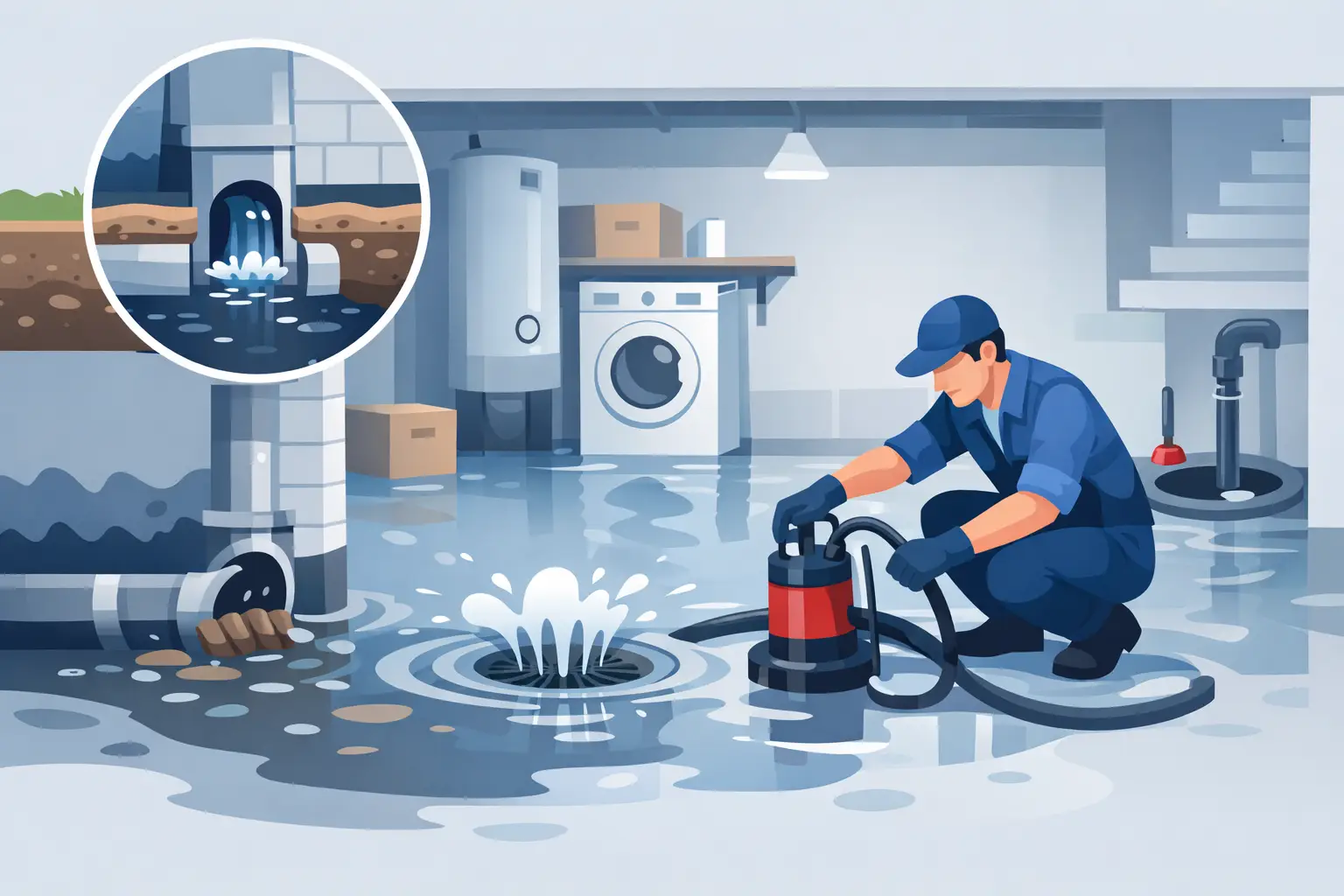
A basement floor drain backing up is the kind of problem that turns urgent fast. If you need basement drain backup help, the first priority is simple – stop using water, protect the area, and figure out whether the issue is isolated to the basement or tied to a larger sewer problem.
The reason this matters is that a backup at the basement drain is often the lowest point in the system. When wastewater cannot move out the way it should, it comes back where gravity gives it the easiest path. That can mean dirty water on the floor, damage to finished spaces, and a bigger repair if the cause is ignored.
What a basement drain backup usually means
A basement floor drain does not back up for no reason. In some cases, the problem is a local clog near the drain opening. In others, the drain is doing exactly what it is supposed to do – showing you that the main line is blocked, slow, or overwhelmed.
If you notice water coming up when you run a washing machine, take a shower, or flush a toilet upstairs, that points to a drainage problem farther down the line. If the backup happens during heavy rain, the issue may involve the building drain, a catch basin, or a sewer system that cannot handle the volume. If the basement drain smells bad, gurgles, or drains slowly even before a backup, those are early warning signs worth taking seriously.
For homeowners and property managers, the key is not guessing wrong. A small-looking backup can be the first visible sign of a larger sewer issue underground.
Basement drain backup help starts with the right first steps
When wastewater appears at a basement drain, every gallon used in the building can make the situation worse. That is why the first move is to stop running water right away. Do not flush toilets, start dishwashers, run sinks, or do laundry until you know what is happening.
Next, keep people and pets out of the affected area. Water coming out of a floor drain may contain sewage and bacteria. If items are stored nearby, move what you safely can to a dry space. Wear gloves and avoid direct contact.
At that point, check for clues without taking the system apart. Is only the basement drain affected, or are other fixtures draining slowly too? Do you hear gurgling from nearby drains or toilets? Did the problem start after rain, or after heavy water use inside the property? Those details help narrow down whether you are dealing with a branch drain issue, a main sewer line blockage, or storm-related overload.
What not to do during a backup
This is where many small problems get worse. Do not keep testing the drain by running more water. Do not pour chemical drain cleaners into a backed-up basement drain. Those products rarely solve a sewer blockage, and they can create safety issues for anyone who needs to inspect or clear the line afterward.
You also want to be careful with store-bought drain snakes if the problem may be in the main line. A shallow clog near the drain opening is one thing. A blockage deeper in the building drain or sewer line is another. Using the wrong equipment can waste time or damage older piping.
If the backup involves repeated overflow, multiple fixtures, or sewage, treat it as a professional service call rather than a weekend project.
Common causes behind a basement drain backup
There is no single answer, which is why proper diagnosis matters. In Chicago-area properties, a basement drain backup often comes down to one of a few issues.
A blockage in the main sewer line is one of the most common causes. Grease, wipes, debris, scale buildup, and root intrusion can restrict or completely stop flow. When that happens, the basement drain often shows the problem first.
Older homes may also have deteriorated clay or cast iron sewer lines. Over time, these lines can crack, shift, corrode, or collect heavy buildup on the inside walls. The result is slower drainage and a higher chance of backups.
In some buildings, the problem is tied to an ejector pump system. If a pump fails, loses power, or cannot keep up, wastewater from lower-level fixtures may have nowhere to go. During storms, overloaded municipal systems and drainage issues around the property can also contribute, especially if there are defects in the private sewer line.
It depends on the property, the age of the piping, and what was happening right before the backup started. That is why a quick visual guess is not enough when the goal is a lasting fix.
How a professional diagnosis saves time
Good basement drain backup help is not just about clearing water off the floor. It is about finding the exact reason the backup happened so it does not return next week.
A professional inspection usually starts with identifying whether the issue is local or system-wide. From there, the right equipment matters. Drain cleaning tools can remove certain blockages, but a sewer camera inspection can show what is actually happening inside the line. If roots, heavy grease, broken pipe sections, or bellied sewer lines are involved, the solution changes.
This is where experience counts. The right diagnosis can tell you whether the line needs cleaning, hydro jetting, repair, or replacement of a damaged section. Without that step, you risk paying for a temporary opening in a line that is still failing.
When hydro jetting makes sense
Not every blocked line needs the same treatment. For some systems, cabling may punch through a blockage and restore basic flow. That can help in the short term, but it may leave heavy residue on the pipe walls.
Hydro jetting is often the better option when grease, sludge, scale, or buildup is the real problem. It uses high-pressure water to clean the inside of the pipe more thoroughly. That can be especially useful in commercial settings, multi-unit buildings, and older lines that suffer from repeated buildup.
Still, hydro jetting is not automatic. If the line is badly damaged or collapsed, pressure cleaning may not be the first move. A camera inspection helps determine whether the pipe condition supports jetting or whether repair is the smarter path.
Signs the problem may be bigger than one drain
A basement floor drain can be the warning sign for a broader sewer issue. If toilets are bubbling, tubs are slow, or more than one drain is backing up, the problem likely reaches beyond that basement opening.
Repeated backups are another sign. If the drain was cleared before but the issue keeps coming back, there is usually an underlying condition that was never fully addressed. Root intrusion, pipe damage, offsets, and heavy buildup are common repeat offenders.
For property managers and business owners, this matters even more. One backup can disrupt tenants, create sanitation concerns, and affect multiple units or work areas. Fast response matters, but so does making the repair decision based on real findings rather than guesswork.
Preventing the next basement drain backup
Prevention is never perfect, but it does reduce the chances of another emergency. Regular drain cleaning can help properties with a history of buildup. Camera inspections are useful when a line has backed up before and the cause is still unclear.
It also helps to watch what goes into the system. Grease, wipes, paper towels, and debris all contribute to blockages. In homes with older sewer lines, periodic inspection is often worth it before a backup forces the issue.
If the property has an ejector pump, routine testing and maintenance matter. A pump system that fails at the wrong time can create a serious lower-level backup. The same is true for catch basins and exterior drainage systems on properties that struggle during storms.
For Chicagoland buildings, age and weather both play a role. Many properties have older underground lines, and heavy rain can expose weaknesses fast. Staying ahead of those weaknesses is easier than dealing with sewage on a basement floor.
When to call for basement drain backup help
If the backup includes sewage, affects multiple fixtures, returns after past cleaning, or starts during normal water use inside the building, it is time to bring in a professional. The same goes for any situation involving an ejector pump, suspected main line blockage, or signs of underground sewer damage.
At Grayson Sewer and Drain, we see these problems for what they are – urgent, messy, and not something customers should have to figure out alone. The right response is fast, clear, and built around solving the actual problem, not just pushing the water back for a day or two.
A backed-up basement drain is a warning sign. The sooner you act on it, the better your chances of keeping the damage contained and the repair straightforward.
Related Articles

Sewer Repair vs Replacement: What to Choose
By |

Commercial Drain Cleaning Service Basics
By |
